Bladderwrack Benefits for Lymphatic and Thyroid Support
| What it is | Bladderwrack (Fucus vesiculosus) — a brown seaweed and one of the richest natural plant sources of iodine. |
| Key benefit | Traditionally used to supply iodine and trace minerals that support healthy thyroid function, and as a folk lymphatic tonic. |
| The active compounds | Iodine, plus fucoidan, alginates and fucoxanthin — the sulfated polysaccharides that make it slippery. |
| How to use it | In small, consistent amounts — iodine strength varies, so the label is your guide and more is not better. |
Of all the botanicals that show up in cleansing and lymphatic formulas, bladderwrack is one of the most misunderstood. It is not a root or a flower but a seaweed — a leathery brown alga that grows on rocky Atlantic coastlines and takes its name from the little air-filled bladders that keep its fronds afloat. For centuries it has been valued for one standout quality: it concentrates iodine and minerals from seawater like almost nothing else on land or sea. In this guide we will unpack the real bladderwrack benefits for lymphatic and thyroid support, how the seaweed is thought to work, the compounds behind its reputation, sensible dosing context, and how to read a label so you use it wisely.
A grounding note before we start: bladderwrack is a general wellness botanical with a long traditional record, and it is also one of the herbs that most deserves a note of caution because of its iodine content. Nothing here is medical advice, and bladderwrack is not intended to diagnose, treat, cure or prevent any disease.
What is bladderwrack?
Bladderwrack (Fucus vesiculosus) is a species of brown seaweed in the family Fucaceae. It grows in the intertidal zone of the North Atlantic and Pacific, where it is exposed and submerged twice a day with the tides. Historically it was one of the original sources of iodine — the element was first isolated from seaweed ash in the early nineteenth century — and dried bladderwrack was a coastal folk staple long before anyone understood why it seemed to help.
The plant is a champion bio-accumulator. Because it bathes in mineral-rich seawater, its fronds gather iodine, potassium, magnesium, calcium and a range of trace elements. That same talent is the reason quality and sourcing matter so much: a seaweed that concentrates minerals can also concentrate whatever else is in the water, which is why reputable suppliers test their harvest. When bladderwrack appears in a modern lymphatic blend, it is included in small, measured amounts as a mineral-and-iodine contributor rather than as a bulk ingredient.
How bladderwrack supports thyroid function
Iodine is where this herb earns both its reputation and its warning label. The NIH Office of Dietary Supplements' iodine fact sheet sets out the requirement, the tolerable upper intake level, and the fact that both deficiency and excess can disturb thyroid function. A 2026 clinical study in the European Journal of Nutrition on habitual seaweed consumption, iodine nutrition and thyroid function shows how quickly seaweed intake moves iodine status in practice — which is precisely why seaweed supplements are not a casual purchase.
The clearest, best-understood bladderwrack benefit is nutritional: it is a natural source of iodine, and iodine is the raw material your thyroid uses to build its hormones. The thyroid gland, a small butterfly-shaped organ at the base of the neck, cannot manufacture thyroid hormone without iodine, and those hormones in turn set the pace of your metabolism — how your body uses energy, manages temperature and handles fluids. That is the entire logic behind bladderwrack's traditional thyroid reputation: supply the mineral the gland needs, and you support the gland's ordinary, healthy work.
Here is the crucial nuance, though. Iodine is a nutrient with a genuine sweet spot: too little is a problem, but too much can be a problem too, especially for people whose thyroid is already over- or under-active. Seaweed iodine content is also notoriously variable, swinging widely between species, harvest sites and even seasons. This is exactly why careful herbalists treat bladderwrack with respect, use it in small standardised amounts, and steer anyone with a thyroid condition toward their doctor first. Bladderwrack is a supporter of normal function, not a self-directed thyroid remedy.

The thyroid–metabolism–lymph connection
Why does a thyroid herb turn up in a lymphatic blend? Because the systems overlap. Thyroid hormones influence metabolic rate and fluid handling, and sluggish fluid balance is exactly the kind of everyday complaint people reach for lymphatic support to address. Traditional herbalists grouped bladderwrack with the “deep” alterative and drainage herbs for this reason — it was seen as working on the tissues and fluids of the body rather than on a single organ. That does not mean it drains lymph directly; it means it sits comfortably in a formula whose goal is whole-body fluid and metabolic balance.
The active compounds in bladderwrack
Beyond iodine, bladderwrack is studied for a group of distinctive marine compounds:
Fucoidan
Most of what is written about fucoidan comes from laboratory work rather than people. A 2022 review in Molecules on the anti-cancer potential of fucoidan as a drug is a fair illustration: a large preclinical literature, and a candid acknowledgement that clinical translation is still ahead of it. Read fucoidan claims on a supplement label with that gap in mind.
Fucoidan is a sulfated polysaccharide — a complex, sulfur-decorated sugar chain — found in brown seaweeds. It is the subject of a good deal of laboratory research into its effects on immune signalling and the behaviour of cells, though most of this work is preclinical and does not translate into health claims. Fucoidan is part of why bladderwrack has a folk reputation as a “tissue” tonic.
Alginates
Alginates are the gel-forming fibres that give seaweed its slippery, mucilaginous feel. In the gut they behave like a soothing soluble fibre, and they are so useful as a gelling agent that food manufacturers extract them for everyday use. Their traditional value in herbalism is as a demulcent — something that coats and soothes.
Fucoxanthin and minerals
Fucoxanthin is the brownish carotenoid pigment that colours the plant, studied as an antioxidant. Alongside it sits that broad mineral profile — potassium, magnesium, calcium and trace elements — which is really the everyday nutritional case for seaweed as a food.
Minerals from the sea, in every dropper
LymphFlow blends traditional lymphatic and cleansing botanicals into easy, alcohol-free drops — a simple daily tonic backed by a 60-day money-back guarantee.
 See LymphFlow Packages
Bladderwrack dosing context
Because iodine strength varies so widely, bladderwrack is one botanical where a generic internet dose is genuinely unhelpful. Understanding the forms helps you read any label sensibly:
Culinary and traditional use
Coastal cultures ate small amounts of dried seaweed as food, and traditional herbalists used modest quantities of dried bladderwrack in teas and tonics. The operative word is modest — seaweed was a seasoning and a tonic, not a bulk food.
Concentrated extracts and capsules
Standardised extracts may state an iodine amount per serving, which is the most useful figure you can find on a bladderwrack label. If a product tells you how much iodine it delivers, it is being transparent about the one thing that matters most for safety.
Liquid drops
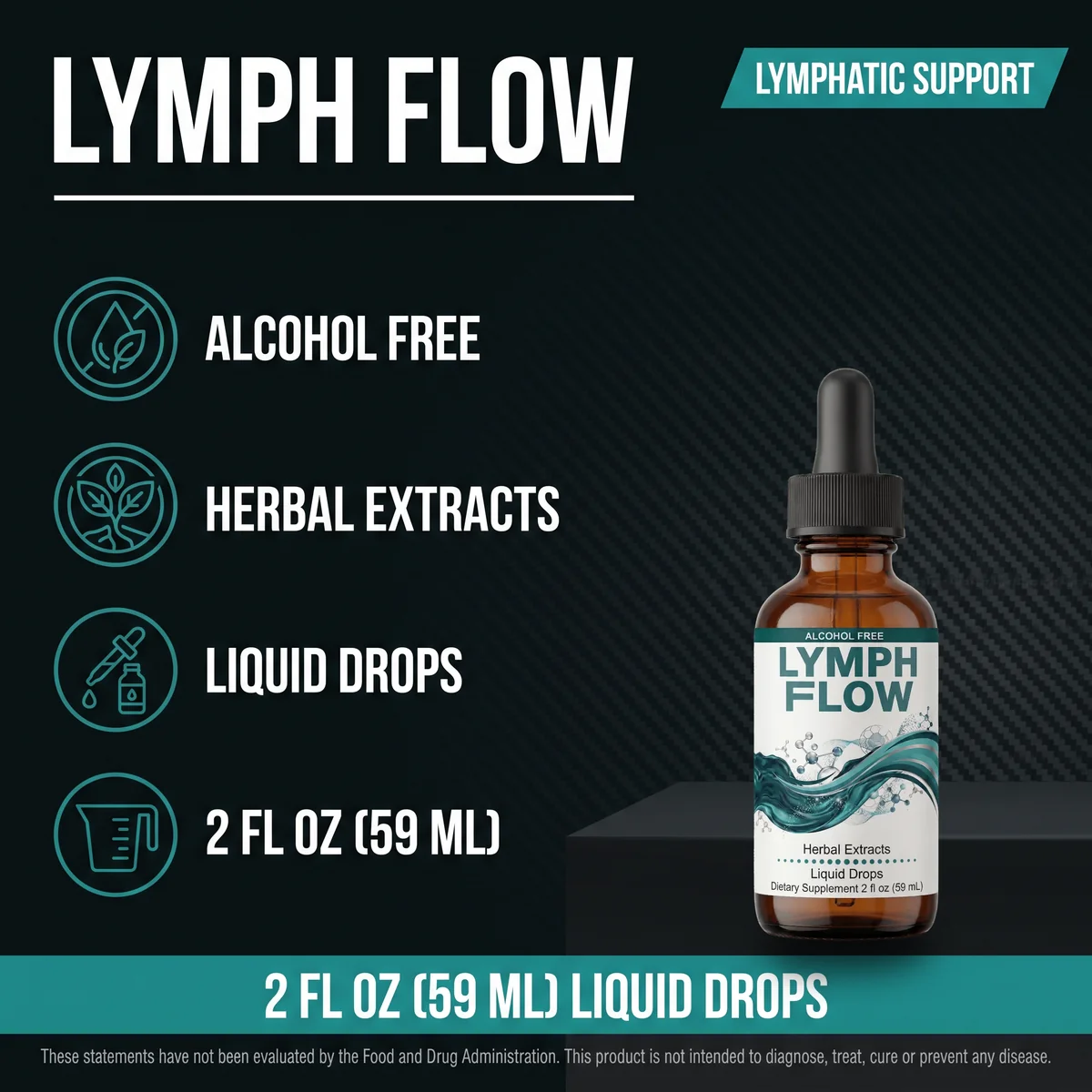
One point of honesty, because it matters more than a sale: bladderwrack is not one of the botanicals in LymphFlow. That formula is built on cleavers, red root, burdock, dandelion, echinacea, astragalus, ginger and milk thistle — eight land herbs, no seaweed and no added iodine. We cover bladderwrack here because it turns up constantly in lymphatic and “thyroid support” formulas elsewhere, and because the iodine question deserves a straight answer wherever you meet it. If you are already taking an iodine-bearing seaweed product, that is a reason to read a lymphatic blend's label carefully rather than stacking two. Whatever the format, the rule is firm — follow the product's own serving directions, do not combine several iodine sources, and start at the low end.
What to look for on a bladderwrack label
Use this checklist when you compare products:
1. Species and plant part
The label should name Fucus vesiculosus and describe it as the whole thallus or frond. “Seaweed” alone is not specific enough — there are many edible algae with very different iodine profiles.
2. An iodine figure or a testing statement
The best bladderwrack products either state the iodine content per serving or note that the seaweed is tested for heavy metals and contaminants. Because seaweed accumulates whatever is in the water, third-party testing is a real mark of quality.
3. Alcohol-free if you take it daily
If you are using a marine tonic as part of a long-term daily routine, an alcohol-free base is gentler for everyday use. We break down the format question in our guide to alcohol-free herbal tinctures vs alcohol-based extracts.
4. Sensible companions and honest claims
In a lymphatic formula, bladderwrack pairs naturally with drainage and cleansing herbs like cleavers and red root. Look for language describing traditional or general use, and skip anything that promises to “fix” the thyroid or “melt” anything — those are red flags, not benefits.
How bladderwrack fits a whole-body routine
Bladderwrack is the “minerals from the sea” piece of the puzzle, but it works best as one small part of a bigger picture. The lymphatic system responds to movement, hydration and breathing; the thyroid is influenced by sleep, stress and overall nutrition; and no single seaweed replaces any of that. A marine tonic slots into that framework in a supporting role. For the drainage side of the story, our guide to cleavers herb benefits for lymphatic drainage is a natural companion, and the red root guide covers cleavers' classic partner. To understand the daily habits that do most of the heavy lifting, start with our natural lymphatic support guide.
You can also learn more about the full formula and how the botanicals are chosen on the LymphFlow ingredients page. The through-line is simple: pick traditional botanicals with a clear rationale, deliver them gently and in measured amounts, and take them consistently — while respecting the ones, like bladderwrack, that call for a little extra care.
Add Lymphatic Support to Your Day
Frequently asked questions
What is bladderwrack good for?
Bladderwrack (Fucus vesiculosus) is a brown seaweed traditionally used as a source of natural iodine and as a mineral-rich tonic. In folk herbalism it is associated with supporting healthy thyroid function and, because the thyroid influences metabolism, with everyday energy and fluid balance. It is a general wellness botanical, not a treatment for any disease.
How does bladderwrack support the thyroid?
The thyroid needs iodine to build its hormones, and bladderwrack is one of the richest plant sources of iodine. That is the classic rationale for its traditional thyroid use. Because iodine content in seaweed is highly variable, standardised products and label transparency matter, and anyone with a thyroid condition or on thyroid medication should speak with a physician first.
Why is bladderwrack used in lymphatic blends?
Bladderwrack contains fucoidan and alginates — sulfated polysaccharides that give the plant its slippery texture — and has a long folk reputation as a deep-tissue and lymphatic tonic. Herbalists have paired it with drainage herbs such as cleavers and red root as part of cleansing formulas. Its main documented value nutritionally is as a source of iodine and trace minerals.
How much bladderwrack is typically taken?
There is no single universal dose because iodine strength varies so much between batches and forms. Traditional amounts are small, and concentrated extracts or liquid drops use far less raw seaweed than a culinary portion. Always follow the serving size on the product label, start low, and do not stack multiple iodine sources.
Who should avoid bladderwrack?
People who are pregnant or nursing, who have hyperthyroidism or any thyroid disorder, who take thyroid or lithium medication, who have a seafood or iodine sensitivity, or who are under 18 should avoid bladderwrack unless a physician advises otherwise. It is not intended to diagnose, treat, cure or prevent any disease.
References
- Iodine: Fact Sheet for Health Professionals (NIH Office of Dietary Supplements)
- Impact of habitual seaweed consumption on iodine nutrition and thyroid function: a non-randomized pre-post clinical study (European Journal of Nutrition, 2026)
- Seaweeds in the Oncology Arena: Anti-Cancer Potential of Fucoidan as a Drug-A Review (Molecules, 2022)
- Grieve M. A Modern Herbal. (Entry: Bladderwrack, Fucus vesiculosus.)
Research on an individual botanical is not evidence about any finished blend. No clinical trial has been published on the LymphFlow formula itself, and none of the sources above tested it. Every link was checked against its source record on 3 September 2026.
† These statements have not been evaluated by the FDA. This product is not intended to diagnose, treat, cure or prevent any disease. This article is for general information only and is not medical advice.