How to Support Your Lymphatic System Naturally (A Practical Daily Guide)
| The idea | Your lymphatic system has no pump — it moves when you do. Daily habits matter more than any single “cleanse”. |
| Daily basics | Movement, hydration, deep breathing and gentle dry brushing. |
| Where herbs fit | Traditional lymphatic botanicals like cleavers and red root can complement the basics. |
What your lymphatic system does all day
Two recent reviews are worth reading if you want the mechanism rather than the metaphor. The 2025 Annual Review of Physiology paper on the transport and immune functions of the lymphatic system describes both jobs the network does at once; a companion review of lymphatic clearance and pump function explains that lymphatic vessels contract on their own and are then helped along by muscle movement, breathing and tissue pressure. That second finding is the whole reason the habits below work.
Your lymphatic system is one of the quietest, hardest-working networks in your body. It’s a web of thin vessels, hundreds of small nodes and a clear fluid called lymph that constantly bathes your tissues. Its jobs are simple to describe and surprisingly important: it drains excess fluid from between your cells, ferries immune cells to where they’re needed, and carries cellular waste toward the bloodstream so your body can clear it out.
Here’s the catch that most people never learn in school: unlike your circulatory system, the lymphatic system has no central pump. Your heart pushes blood around on its own, but lymph only moves when you move. Every step you take, every deep breath, and every muscle contraction gently squeezes the surrounding lymph vessels and nudges the fluid along. Sit still for hours and the flow slows to a crawl.
Signs your daily routine may be working against it
You don’t need to over-diagnose yourself, but a few everyday patterns tend to leave the lymphatic system under-stimulated. Long stretches at a desk, frequent flights, low water intake, shallow “chest” breathing, and a mostly sedentary evening all reduce the muscle movement and hydration that lymph relies on. If your days look like that — and for a lot of us they do — the good news is that the fixes are refreshingly low-tech.
Five natural ways to support healthy lymph flow
1. Move often, not just intensely
Because lymph depends on motion, frequency beats intensity. A brisk ten-minute walk, a few flights of stairs, some light stretching, or even rebounding on a mini-trampoline all encourage flow. The single best habit is to break up long sitting: stand, roll your shoulders and walk around once an hour. Consistency throughout the day does more than one hard workout followed by eight hours in a chair.
2. Drink enough water
Lymph is mostly water. When you’re even mildly dehydrated, the fluid becomes thicker and moves less easily. Steady hydration through the day — rather than one big glass — keeps lymph fluid and helps your kidneys clear the waste it delivers. If plain water bores you, herbal teas and water-rich foods count too.
3. Breathe deeply on purpose
The largest lymphatic vessel in the body, the thoracic duct, runs right through your chest and abdomen. Slow, deep “belly” breaths create pressure changes that act like a gentle internal pump for lymph. Just a few minutes of deliberate diaphragmatic breathing — morning, or as an evening wind-down — is an easy, free habit with real mechanical logic behind it.
4. Try gentle dry brushing
A caveat on expectations: dry brushing is a wellness habit, not a clinical technique. The hands-on decongestive therapy used for genuine fluid disorders is a specialist discipline with its own evidence base — a 2025 systematic review in Phlebology examined the individual components of complex decongestive therapy and found the compression element carries most of the weight. Treat your brush as a pleasant five minutes, not as treatment.
Dry brushing — sweeping a soft, natural-bristle brush over dry skin toward the heart before you shower — is a long-standing wellness practice for lymphatic support. Always brush toward the major nodes (in the general direction of the collarbone), use light pressure, and keep it brief. It also leaves skin feeling smooth, which is a pleasant bonus.
5. Eat to lighten the load
A diet rich in vegetables, fruit, fibre and healthy fats supports the organs — especially the liver — that handle the waste your lymph delivers. Easing back on ultra-processed foods, excess salt and constant sugar reduces the fluid retention and inflammation that can make everything feel more sluggish.
Make lymphatic support part of your day
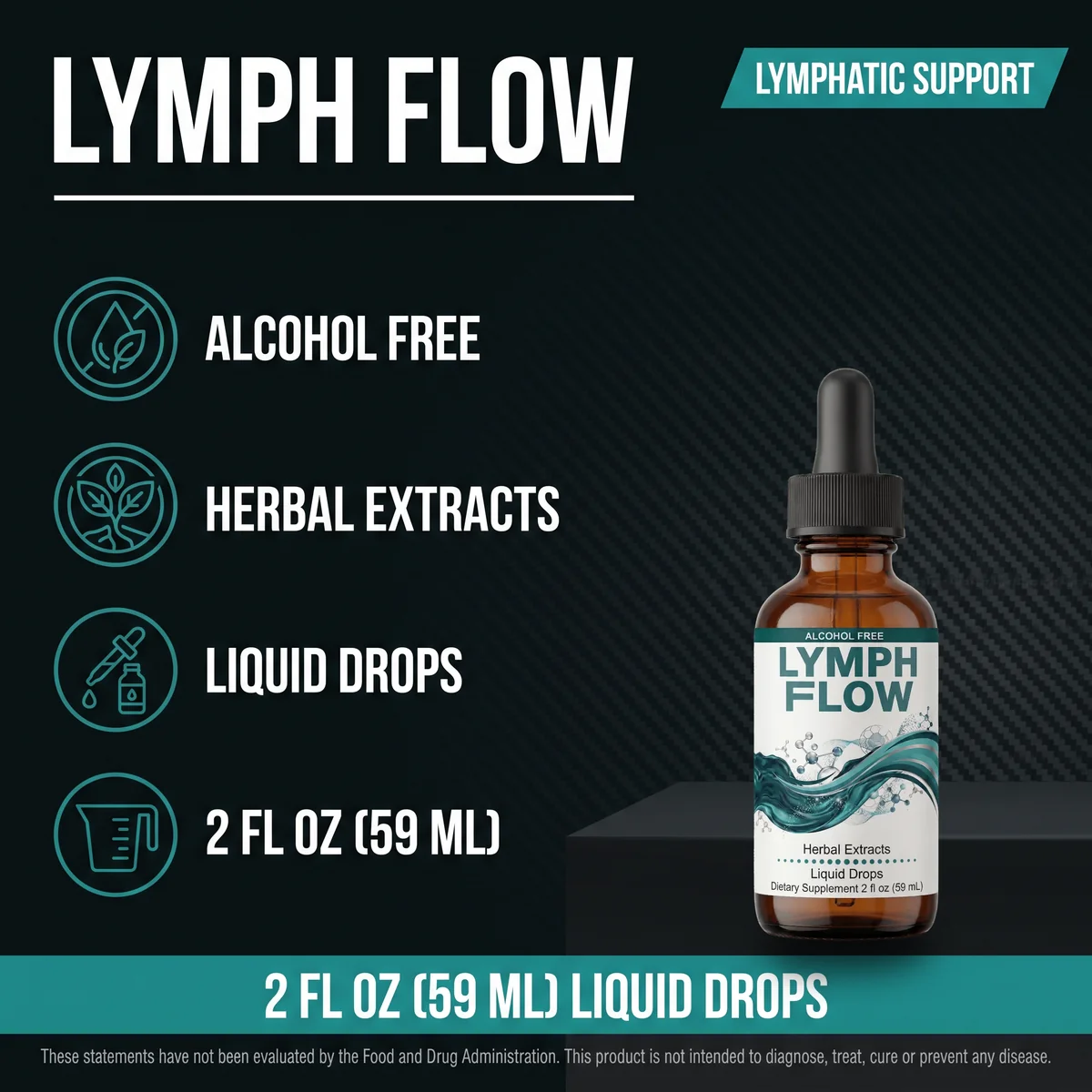
LymphFlow puts traditional lymphatic and cleansing botanicals into simple, alcohol-free drops — an easy addition to the daily habits above, backed by a 60-day guarantee.
See LymphFlow PackagesThree myths about lymphatic “detox” worth dropping
This is not just our opinion. Reviewing the evidence on detoxes and cleanses, the National Center for Complementary and Integrative Health reports that there is little rigorous research showing detox programmes remove toxins or improve health, and that some aggressive regimens carry real risks. The three myths below follow directly from that.
Myth 1: You need a dramatic cleanse. Your liver, kidneys and lymphatic system already detox your body around the clock. There’s no juice fast or single product that “flushes” the system in a weekend — and the aggressive protocols that promise it can leave you dehydrated and depleted. Gentle, consistent support is far more sensible than an annual crash.
Myth 2: More sweating equals more detox. Sweat is mostly water and salt; it’s a temperature-control mechanism, not a primary waste-removal route. Exercise helps your lymph because of the muscle movement involved, not because you’re “sweating out toxins.”
Myth 3: If you feel fine, your lymph needs no attention. The lymphatic system rarely announces itself. That’s exactly why the low-key daily habits — moving, hydrating, breathing — are worth building in before you notice anything at all. Prevention is quieter than a cure, but it’s a much better deal.
How long before you notice anything?
This is the honest part: supporting your lymphatic system is a slow, cumulative process, not a switch you flip. Habits like hourly movement and steady hydration can make you feel less puffy and more energetic within days, simply because you’re moving and drinking more. Herbal support, by contrast, is traditionally used over weeks as part of a routine — which is why many people choose a multi-month supply rather than a single bottle. Whatever you try, give it a fair, consistent run and pay attention to how you actually feel, rather than chasing a dramatic “before and after.”
Where herbs fit into the picture
The daily basics come first — no bottle replaces movement, water and sleep. But traditional herbalism has long leaned on specific botanicals to complement those habits. Cleavers (Galium aparine) is the classic “lymph-mover,” used for generations to support natural lymphatic drainage. Red root (Ceanothus americanus) has a similar reputation for supporting a congested lymphatic system. Cleansing roots such as burdock and dandelion and milk thistle are traditionally used to support the liver and the body’s everyday detox pathways, while echinacea and astragalus round out immune support. All six belong to a category traditional herbalists call alteratives, and understanding that word explains most cleansing formulas at a glance.
Plenty of other herbs get recommended for lymph online, and it is worth knowing which ones actually belong in that conversation. Calendula has the best claim of the outsiders, with a genuine traditional lymphatic-and-skin record; stinging nettle is nourishing and mildly diuretic rather than lymph-moving; ginger and turmeric are warming rhizomes that support circulation and inflammatory balance rather than drainage; bladderwrack is really an iodine question and deserves caution; and yellow dock works on the bowel, not the lymph. None of those last six are in the blend described on this site, and knowing why is more useful than another ingredient list.
This is exactly the thinking behind LymphFlow’s botanical blend. Delivered as alcohol-free liquid drops, it’s a low-effort way to bring these traditional herbs into a routine without the harsh alcohol found in many tinctures. Think of it as a complement to the habits above — not a substitute, and not a treatment for any medical condition.
A simple daily template
Put it together and a realistic day might look like this: a few minutes of deep breathing and your LymphFlow drops with your first glass of water; a short walk or stretch every hour you’re at a desk; a quick dry-brush before your shower; water sipped steadily; and an early, lighter dinner. None of it is dramatic. That’s the point — the lymphatic system responds to small, repeated nudges, not heroic one-off cleanses.
Frequently asked questions
What does the lymphatic system actually do?
The lymphatic system is a network of vessels, nodes and fluid that helps drain excess fluid from tissues, transport immune cells and carry waste products toward the bloodstream for removal. Unlike blood, lymph has no central pump — it relies on muscle movement, breathing and healthy hydration to keep moving.
Can you really support lymph flow naturally?
Yes — the everyday basics matter most. Regular movement, deep breathing, staying hydrated, and gentle techniques such as dry brushing all encourage lymph to keep moving. Traditional lymphatic herbs like cleavers and red root are sometimes used alongside these habits, though they are not a treatment for any medical condition.
How do alcohol-free herbal drops fit in?
Herbal drops such as LymphFlow are a convenient way to add traditional lymphatic and cleansing botanicals to a daily routine without the alcohol found in many tinctures. They complement — rather than replace — movement, hydration and a balanced diet.
References
- Transport and Immune Functions of the Lymphatic System (Annual Review of Physiology, 2025)
- Lymphatic Clearance and Pump Function (Cold Spring Harbor Perspectives in Medicine, 2023)
- Effectiveness of the different components of complex decongestive therapy in patients with chronic venous insufficiency: A systematic review (Phlebology, 2025)
- Detoxes and Cleanses: What You Need To Know (National Center for Complementary and Integrative Health)
Research on an individual botanical is not evidence about any finished blend. No clinical trial has been published on the LymphFlow formula itself, and none of the sources above tested it. Every link was checked against its source record on 3 September 2026.
† These statements have not been evaluated by the FDA. This product is not intended to diagnose, treat, cure or prevent any disease. This article is for general information only and is not medical advice.