Echinacea Benefits for Immune and Lymphatic Support: Uses, Science & Dosing
| What it is | Echinacea (Echinacea purpurea) is a North American coneflower, the best-known Western immune herb and a traditional lymphatic. |
| How it's thought to work | Its alkylamides and polysaccharides are studied for immune-cell interaction; tradition also classes it as a lymphatic and alterative. |
| How it's taken | As a tea, capsule, tincture or, more conveniently, alcohol-free liquid drops (often with a signature tongue-tingle). |
| Label tip | Look for the species, the plant part (root and/or aerial), an alcohol-free base and a clear serving size. |
Ask most people to name a single “immune herb” and they will say echinacea. What fewer people know is that this purple coneflower earns its place in a lymphatic formula for a second reason: in traditional Western herbalism echinacea is not only an immune herb but a lymphatic, used to support the very tissues where much of the immune system lives. That double role is exactly why the echinacea benefits discussed here center on immune and lymphatic support together. In this guide we will look at what echinacea actually is, why it earned its reputation, what tradition and modern science say, how it is dosed, and what to look for on a label.
A quick note before we begin: echinacea is a general wellness botanical. Nothing here is medical advice, and echinacea is not intended to diagnose, treat, cure or prevent colds, flu or any disease. With that framing in place, let us meet the coneflower.
What is echinacea (Echinacea purpurea)?
Echinacea is a genus of daisy-family wildflowers native to the prairies of central North America, instantly recognisable by their drooping pink-purple petals and spiky central cone — the cone is where the name comes from, from the Greek echinos, a hedgehog. Three species dominate the supplement world: Echinacea purpurea (the most widely cultivated and studied), Echinacea angustifolia and Echinacea pallida. Different species, and different plant parts, carry different balances of active compounds, which is one reason the label detail matters so much.
Both the root and the aerial parts (leaf, stem and flower) are used. The plains nations of North America used echinacea extensively long before it entered European medicine, and by the early twentieth century it was one of the most prescribed botanicals of the Eclectic physicians. A fresh, well-made echinacea extract produces a distinctive tingling or buzzing sensation on the tongue — a rough, informal sign that the active alkylamides are present.
Why echinacea sits in a lymphatic blend
Most shoppers think of echinacea purely as a seasonal immune helper, so its appearance in a lymphatic formula can look surprising. It is not. The Eclectic literature describes echinacea as an alterative and a lymphatic — a herb used to support the lymphatic tissue and the body's cleansing functions. That makes botanical sense, because the immune system and the lymphatic system are essentially the same story told two ways.
Your lymphatic system is a network of thin vessels and hundreds of small nodes carrying a clear fluid called lymph. Those nodes are packed with white blood cells; the lymph itself is the highway on which immune cells patrol. So a herb traditionally used to “support the immune system” and one used to “support the lymph” are often the same herb, working on the same tissue. Because lymph has no central pump and moves only when you do, echinacea — like every lymphatic herb — is used alongside movement and hydration. For the daily-habits side of that story, see our companion guide on how to support your lymphatic system naturally.
This is also why echinacea pairs so naturally with the other herbs in a classic blend: red root for spleen and lymph support, cleavers for drainage, and adaptogenic astragalus for longer-term immune resilience. Echinacea and astragalus are often confused as interchangeable, but tradition uses them differently — a distinction worth understanding, which we cover below.

What the science and tradition actually say
Echinacea is one of the few herbs where a straight answer exists. The Cochrane review of echinacea for preventing and treating the common cold pooled 24 trials and concluded that echinacea products have not shown a consistent benefit for prevention, though individual preparations may have a weak effect on treatment; a 2015 JAMA summary of the same question reached an equally cautious reading. NCCIH's own page on echinacea adds the practical caveat that products differ so much in species, plant part and extraction that results from one rarely transfer to another.
Echinacea is one of the more heavily researched Western herbs, so we can be a little more specific here than with rarer botanicals — while staying honest about the limits. Echinacea contains three headline groups of compounds: alkylamides (responsible for the tongue-tingle and studied for interaction with immune signalling), polysaccharides and glycoproteins, and caffeic-acid derivatives such as cichoric acid, which is often used as a quality marker. Laboratory studies have explored how these compounds interact with immune cells.
Human research on echinacea is large but genuinely mixed. Some reviews of cold-related studies have reported modest effects while others found little difference from placebo, and a recurring theme is that results vary wildly depending on the species, the plant part and the extraction method used — products are simply not equivalent. The fair summary: echinacea is a well-studied, traditionally trusted immune-and-lymphatic herb whose real-world results depend heavily on product quality. It is best understood as a supportive daily-wellness ally, not a proven treatment, and any honest guide will resist the urge to overclaim.
Echinacea vs astragalus: two immune herbs, two jobs
Because they share shelf space, echinacea and astragalus are often lumped together, but the tradition uses them almost oppositely. Echinacea is the “acute, short-term, lymph-moving” herb — reached for around moments of extra demand. Astragalus is the “deep, long-term, building” adaptogen — taken steadily over time to support baseline resilience. A thoughtful blend can include both precisely because they cover different timescales. Our full write-up on astragalus root benefits explains the building side in detail.
How echinacea is traditionally dosed
Dosing depends on the species, the part and the preparation, which is why a single number can mislead. Here is the general context so you can read a label with confidence.
Tea and capsules
Dried echinacea root or aerial parts are brewed as a tea or encapsulated as a powder. Capsule doses vary widely by product; the powder route tends to lose the volatile alkylamides that give a fresh extract its tingle, so potency is harder to judge by eye.
Tincture and liquid extract
The concentrated liquid extract is the classic form, and the tongue-tingle makes it easy to gauge freshness. Traditional tincture dosing sits around 1–3 mL taken a few times a day during periods of extra demand. The catch is that most tinctures are alcohol-preserved, which not everyone wants daily.
Alcohol-free drops
A modern, alcohol-free liquid extract lets you take echinacea and its traditional companions without the alcohol burn or the concerns some people have about daily alcohol. The serving is small, taken under the tongue or in a little water, and it fits a busy routine. Whatever form you choose, the golden rule is the same: follow the serving size on the product's own label, and start at the lower end.
Echinacea, without the alcohol
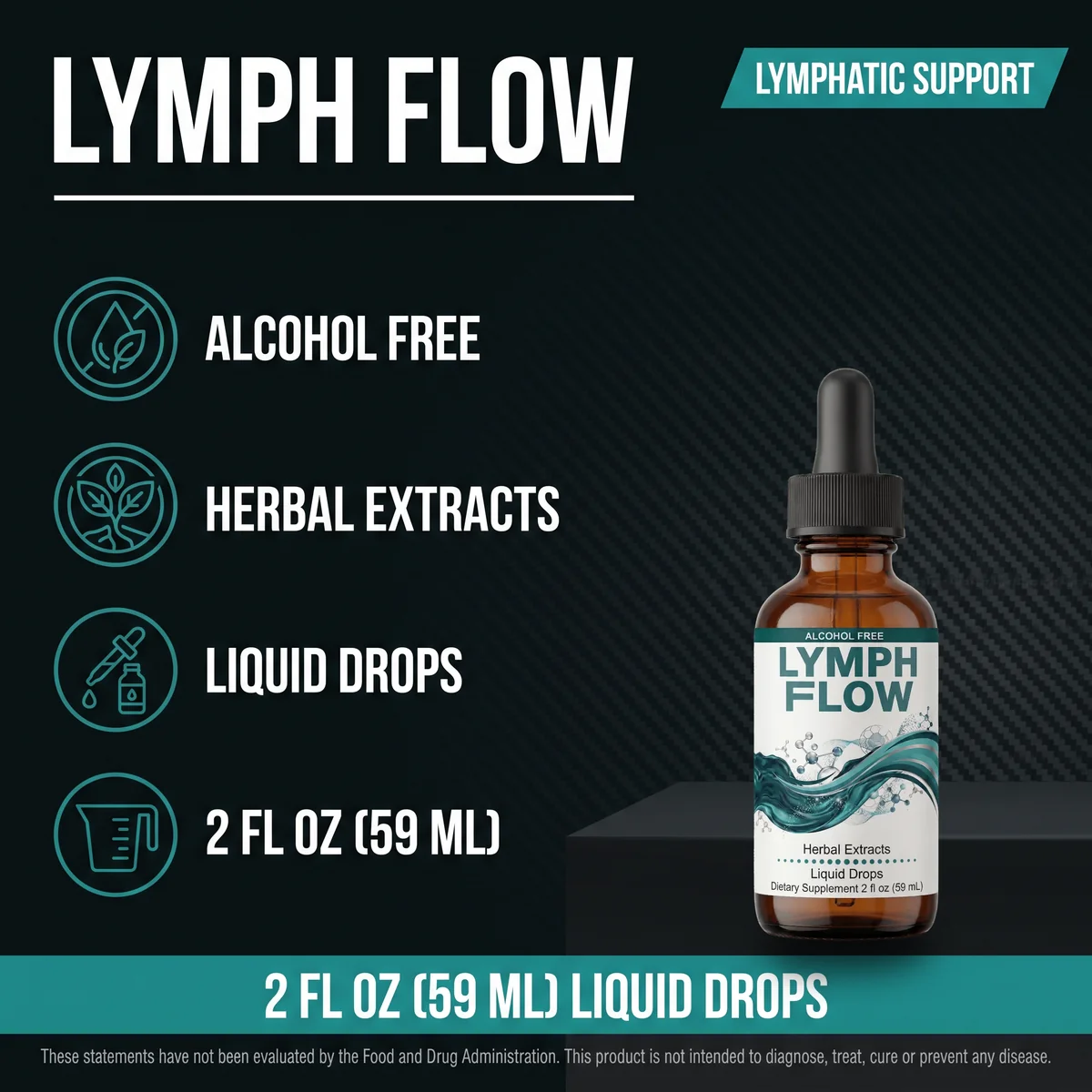
LymphFlow delivers echinacea alongside its traditional lymphatic and immune companions — cleavers, red root, astragalus and more — in simple, alcohol-free drops. It is an easy way to bring this classic coneflower into a daily routine, backed by a 60-day money-back guarantee.
 See LymphFlow Packages
What to look for on an echinacea label
Echinacea is one of the herbs where label detail matters most, because products vary so much. Run through this checklist.
1. The species and plant part
A quality label names the species — Echinacea purpurea, angustifolia or pallida — and the part used (root, aerial parts or both). These carry different compound profiles, so “echinacea” with no further detail tells you little.
2. Alcohol-free vs alcohol base
Decide whether you want an alcohol-based tincture or an alcohol-free glycerite. If you plan to take it daily and prefer to avoid alcohol, an alcohol-free extract is the friendlier choice. We compare the two in depth in our guide to alcohol-free herbal tinctures vs alcohol-based.
3. Signs of a fresh, well-made extract
With a liquid extract, that characteristic tongue-tingle is a reassuring informal sign of intact alkylamides. Standardisation to cichoric acid, or a clear extraction ratio, are more formal quality markers.
4. Thoughtful companions and honest claims
Echinacea shines in a blend that also carries lymphatic movers and a deeper adaptogen. Look for language describing traditional or general use rather than disease claims — a brand that respects the rules tends to respect its ingredients too. To place echinacea in its broader herbal category, see our explainer on what an alterative herb is and how these herbs work.
Who tends to reach for echinacea
Echinacea appeals to people who want a well-known, well-studied immune herb in their cabinet — especially those who travel, work in busy public spaces, or simply want extra support during demanding stretches of the year. Because it also acts as a traditional lymphatic, it fits comfortably in a lymph-first routine rather than being a one-trick seasonal herb.
To be clear once more: echinacea supports general wellness within a healthy routine. It is not a substitute for medical care. Because it acts on the immune system, people with autoimmune conditions or on immune-related medication, and anyone pregnant, nursing, under 18 or with a ragweed/daisy-family allergy, should speak with a physician before starting it.
Putting echinacea to work in a real routine
Here is what a sensible day with echinacea might look like. You take your alcohol-free drops with your first glass of water in the morning; you sleep enough, because rest does more for immunity than any herb; you break up long sitting with short walks so your lymph keeps moving; and you stay hydrated so that lymph stays fluid. The herb is the easy part — the routine is what makes it meaningful. For the full daily template, see our practical guide to supporting your lymphatic system, and to understand how the liquid format is absorbed, read our piece on liquid herbal drops vs capsules.
Frequently asked questions
What is echinacea used for?
Echinacea (Echinacea purpurea) is one of the best-known Western immune herbs. Traditionally it is used to support the immune system and, in older herbal practice, as a lymphatic to support the tissues around the lymph nodes. It is a general wellness herb, not a treatment or cure for colds, flu or any disease.
How does echinacea support immune and lymphatic health?
Echinacea contains alkylamides, polysaccharides and caffeic-acid compounds studied for their interaction with immune cells. In traditional herbalism it is also classed as an alterative and lymphatic — used to support the lymphatic tissue that houses much of the immune system. It works best as part of a healthy, well-rested routine rather than on its own.
How is echinacea usually taken?
Echinacea is taken as a tea, capsule, tincture or, more conveniently, as alcohol-free liquid drops. Many people notice a characteristic tingling on the tongue from a fresh, well-made extract. Alcohol-free formulas such as LymphFlow deliver echinacea without the alcohol found in many tinctures. Always follow the serving directions on the product label.
Is echinacea safe to take every day?
Echinacea has a long record of traditional use and a generally reassuring safety profile. Because it acts on the immune system, people with autoimmune conditions or on immune-related medication, and anyone pregnant, nursing, under 18 or with a ragweed allergy, should check with a physician first. It is not intended to diagnose, treat, cure or prevent any disease.
What should I look for on an echinacea supplement label?
Look for the species (Echinacea purpurea, angustifolia or pallida), the plant part (root, aerial parts or both), whether the extract is alcohol-free, and a clear serving size. A blend that pairs echinacea with cleavers, red root and astragalus follows the classic immune-and-lymphatic tradition.
References
- Echinacea for preventing and treating the common cold (Cochrane Database of Systematic Reviews, 2014)
- Echinacea for preventing and treating the common cold (JAMA, 2015)
- Echinacea (National Center for Complementary and Integrative Health)
- Felter HW, Lloyd JU. King's American Dispensatory. (Entry: Echinacea.)
Research on an individual botanical is not evidence about any finished blend. No clinical trial has been published on the LymphFlow formula itself, and none of the sources above tested it. Every link was checked against its source record on 3 September 2026.
† These statements have not been evaluated by the FDA. This product is not intended to diagnose, treat, cure or prevent any disease. This article is for general information only and is not medical advice.